Posts tagged ‘Emlenton Mill’
The mill hand station is basically the desk in the control area for the miller. The phone is not original to the Mill. It is actually a modern replica phone. Note the 1891 painted on the wall and the respirators hanging to the right. On the wall above the desk is an Emco Mills brochure and the Pa scale calibration forms. We think the Miller had his tobacco in the desk because it has a very powerful oder.

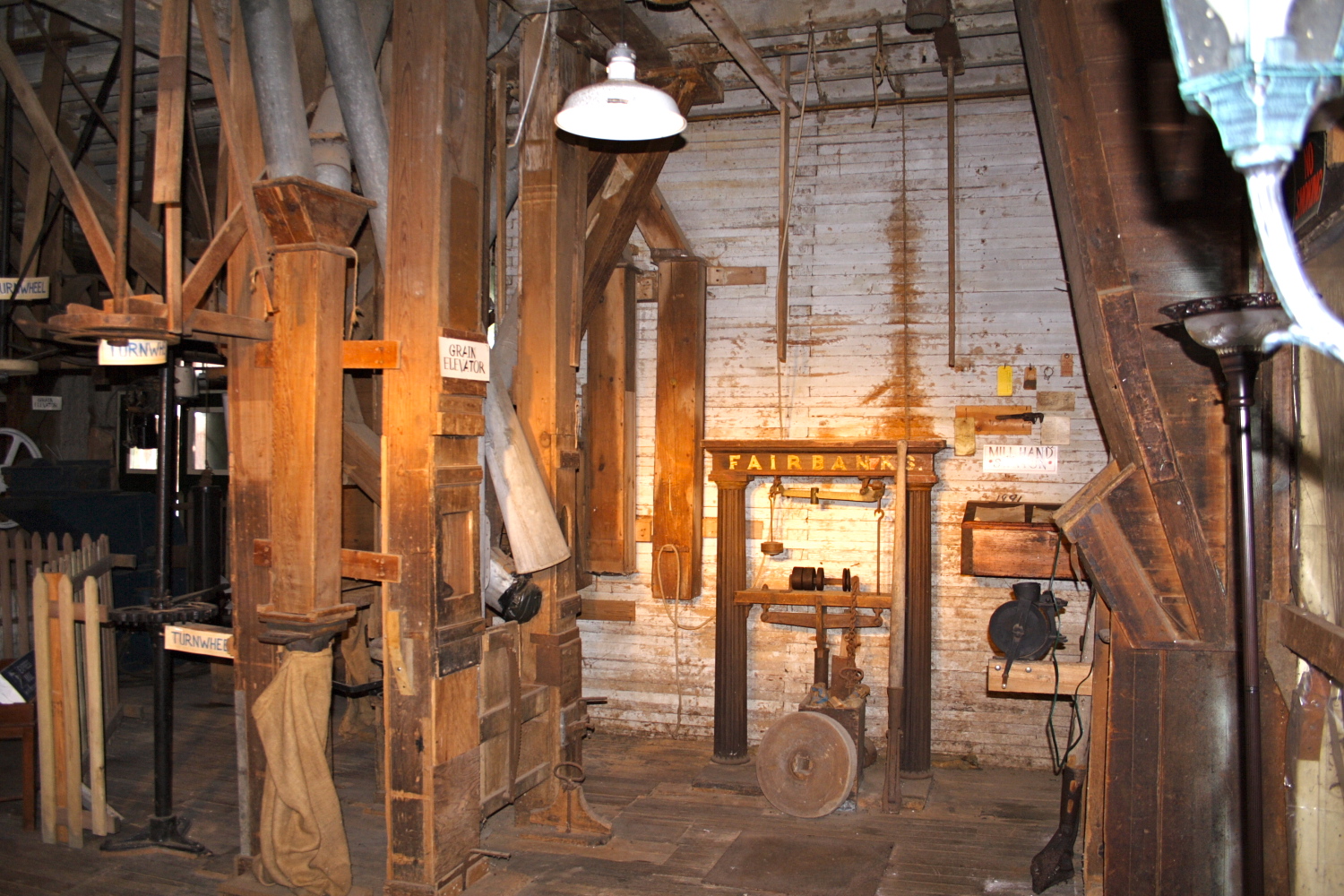
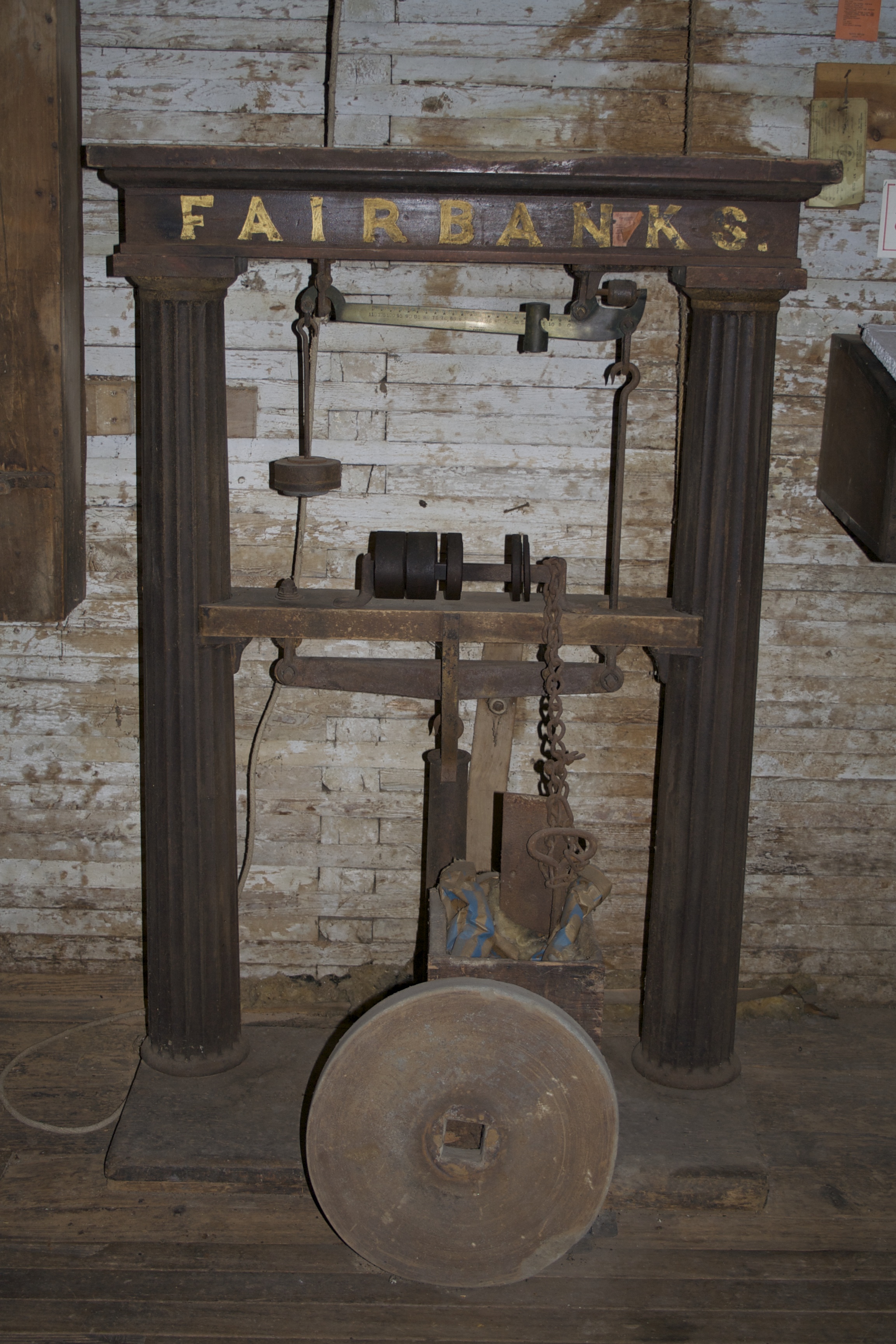
The control center for the Mill was located on the first floor near the railroad tracks. From here the miller could control the operation of the Mill. The grain entered the mill basement and was weighed on the Fairbanks scale. Then up the grain elevator and then gravity fed to the rest of the Mill using the turn wheels and the selectors.
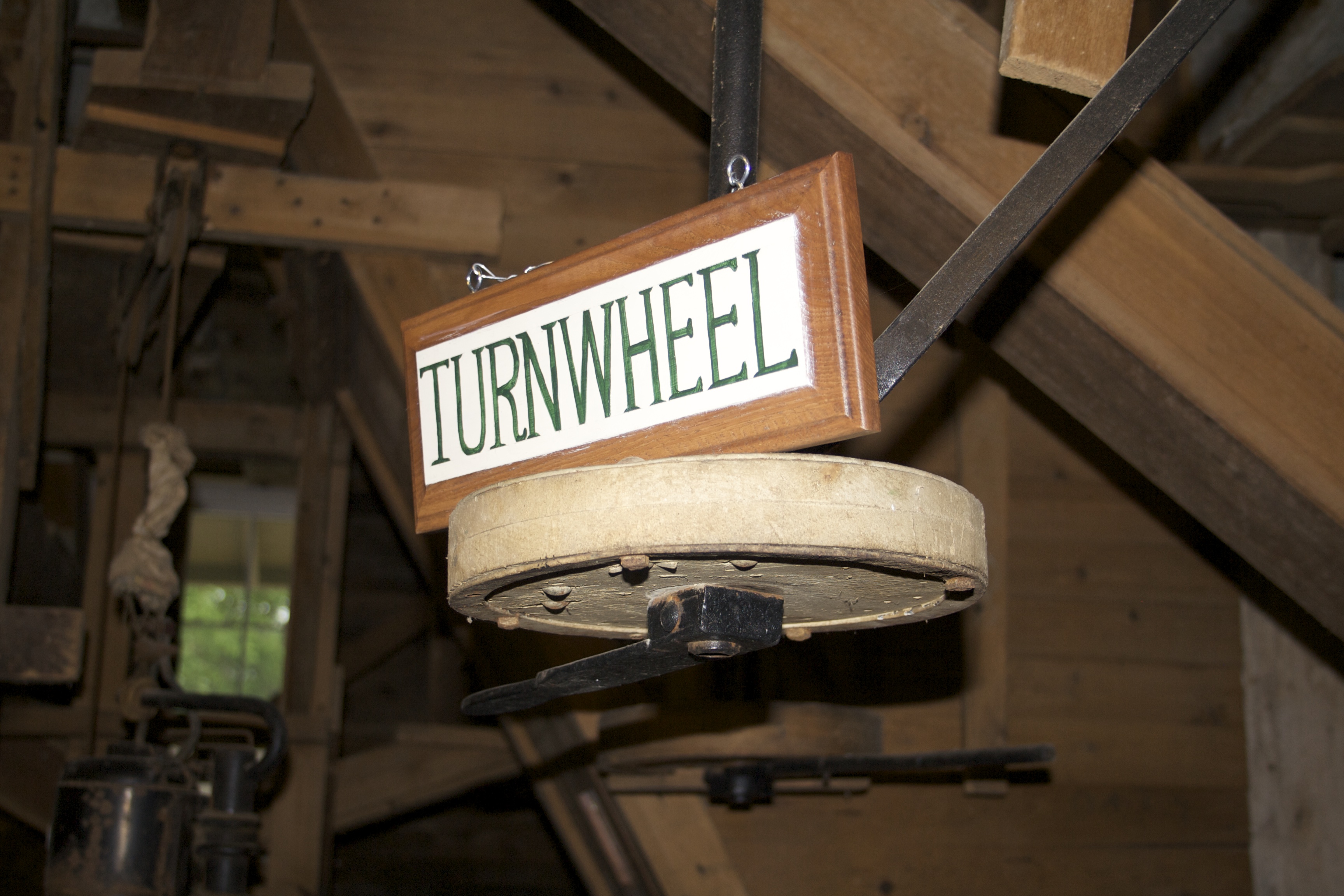
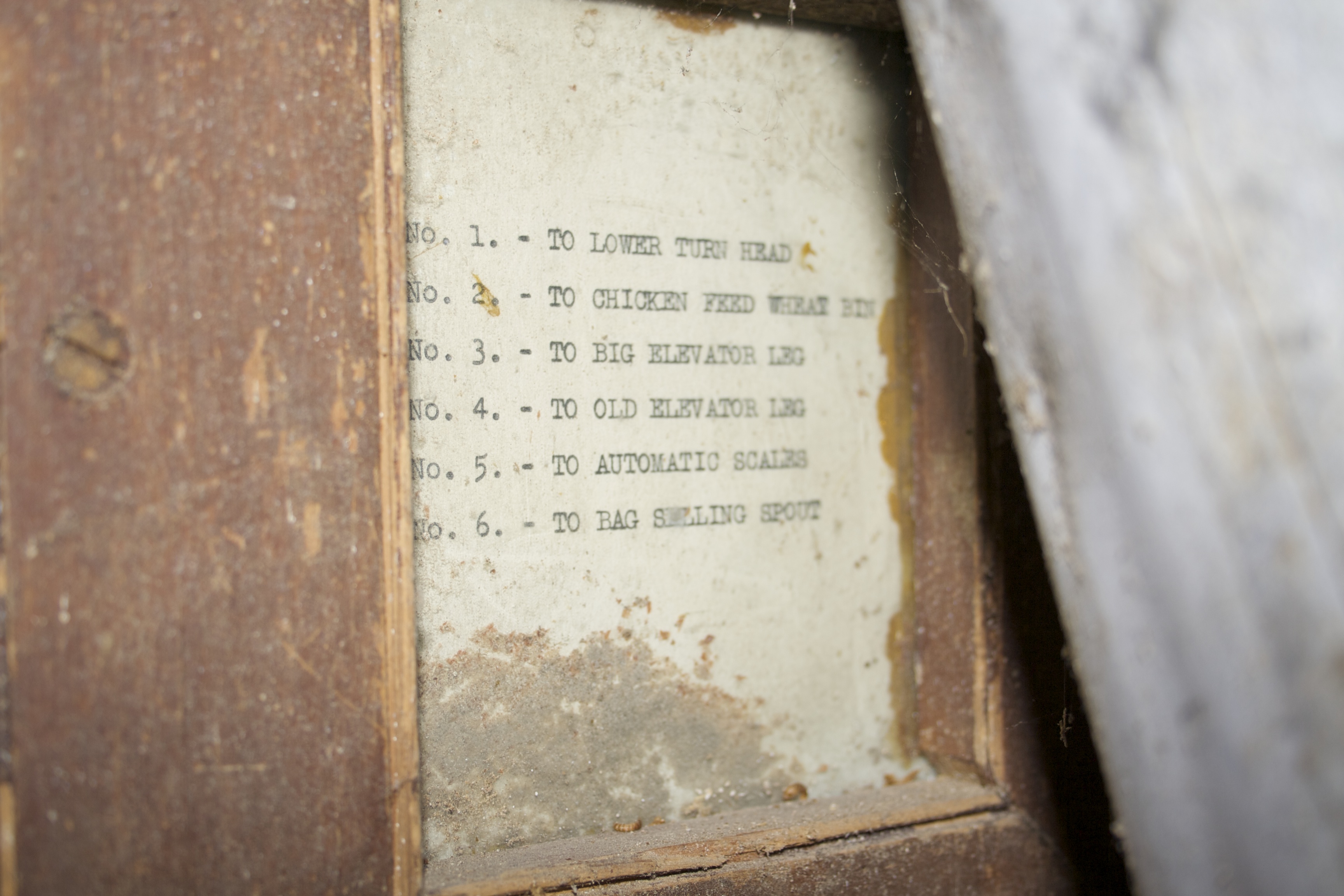
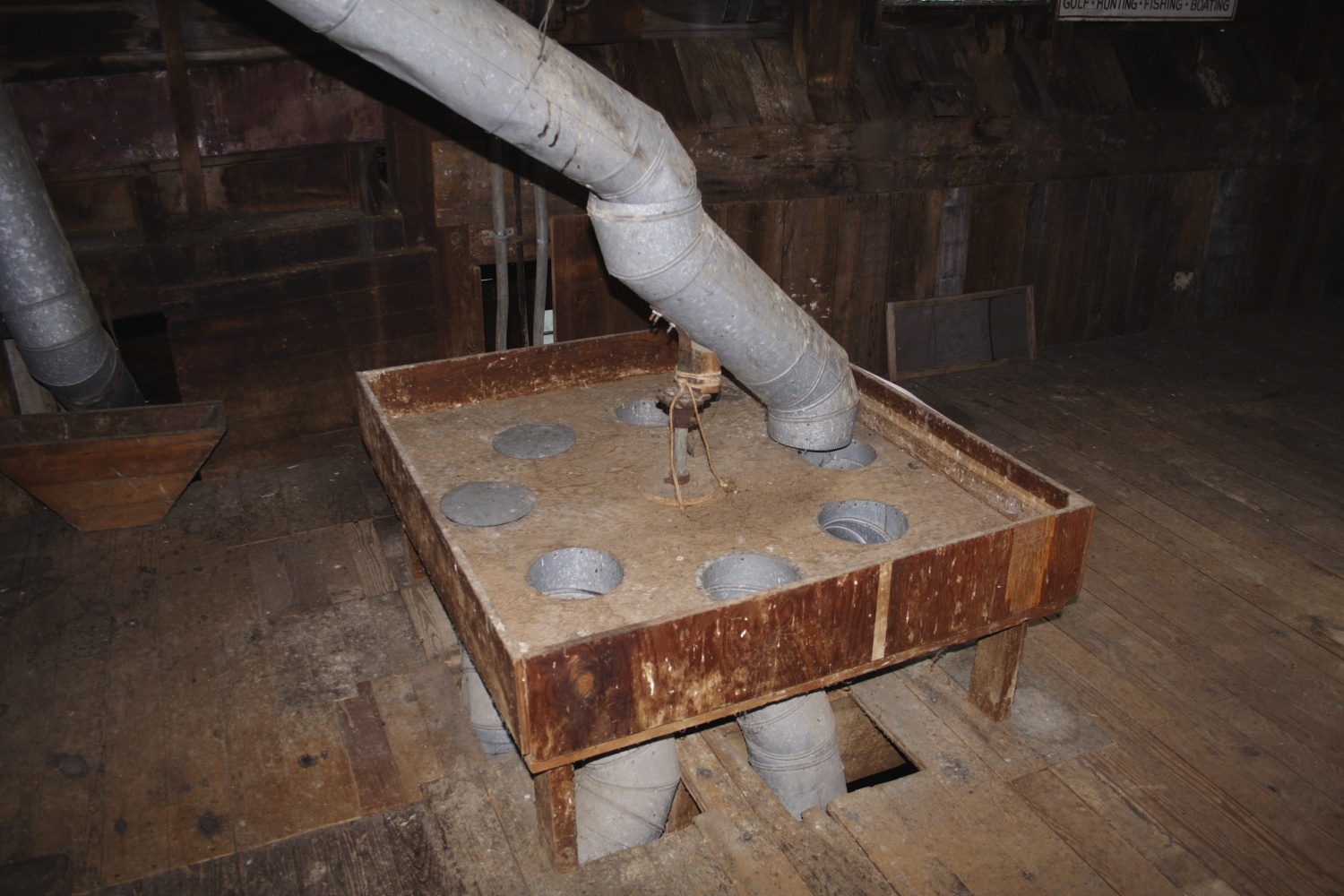
The turn wheel controls were located between the packing area and the control area on the first floor. The were connected by a metal rod (actually a pipe) to the turn wheel head (or selector). The selector shown is in Texas on the fourth floor. Also pictured is the legend for one of the turn wheels telling the miller what each turn wheel position did.
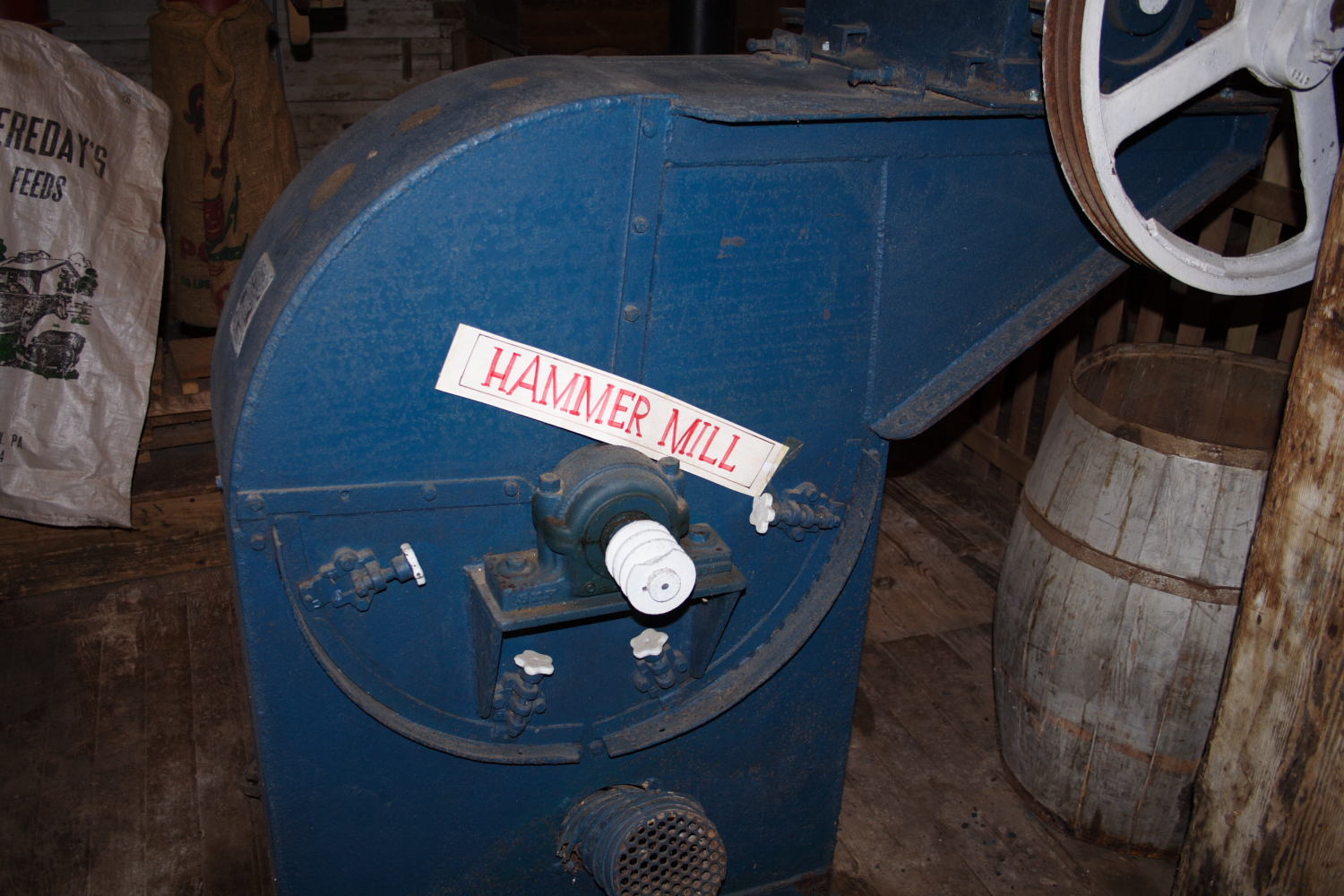
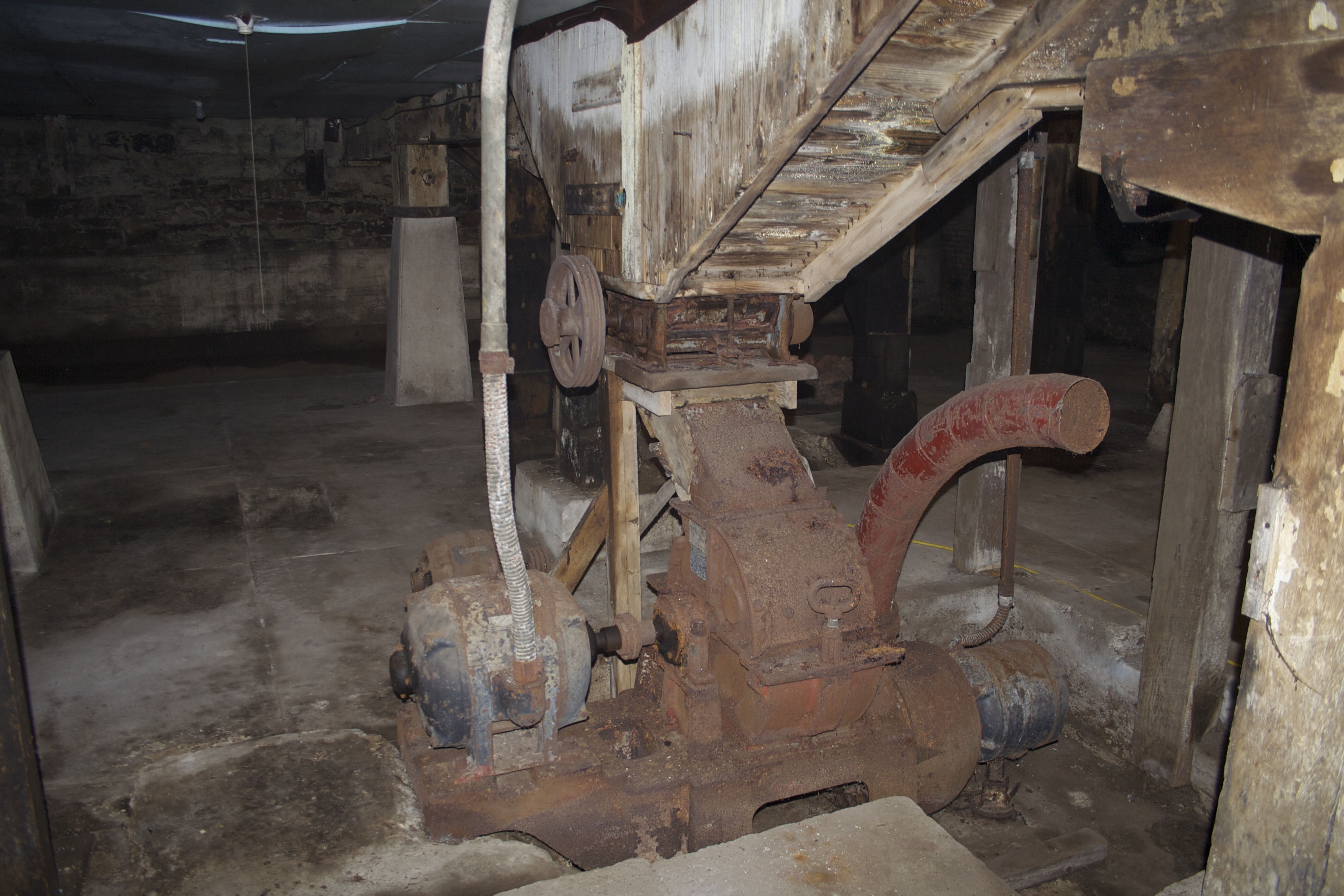
When the Mill opened in 1875 it used french stones to grind grin. But these were later upgraded to hammer mills. The hammer mill took in grain at the top and then a spinning metal flail ground the grain in the circular part of the mill. We had one on the first floor for display but they actually resided in the basement where one could still be found.

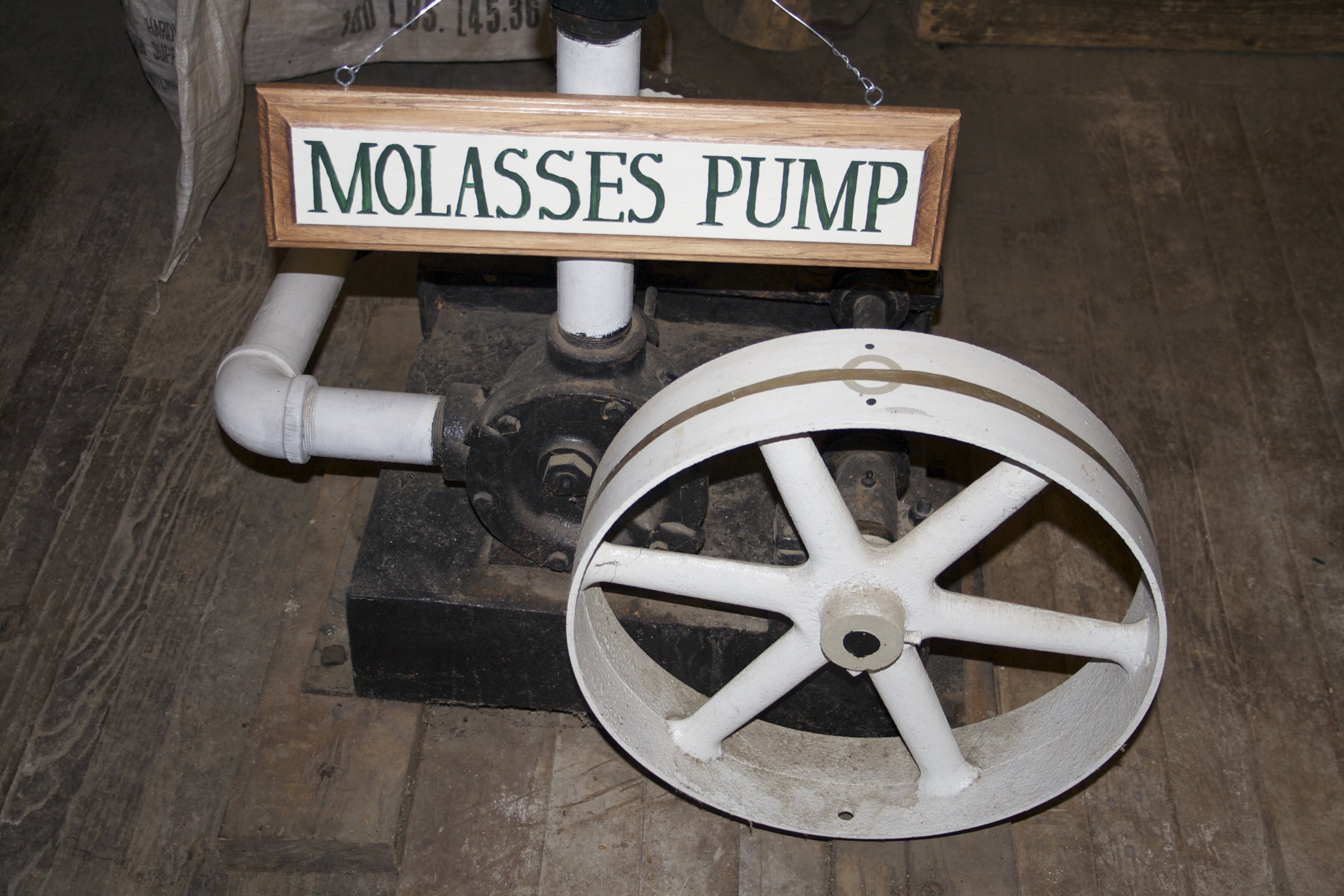
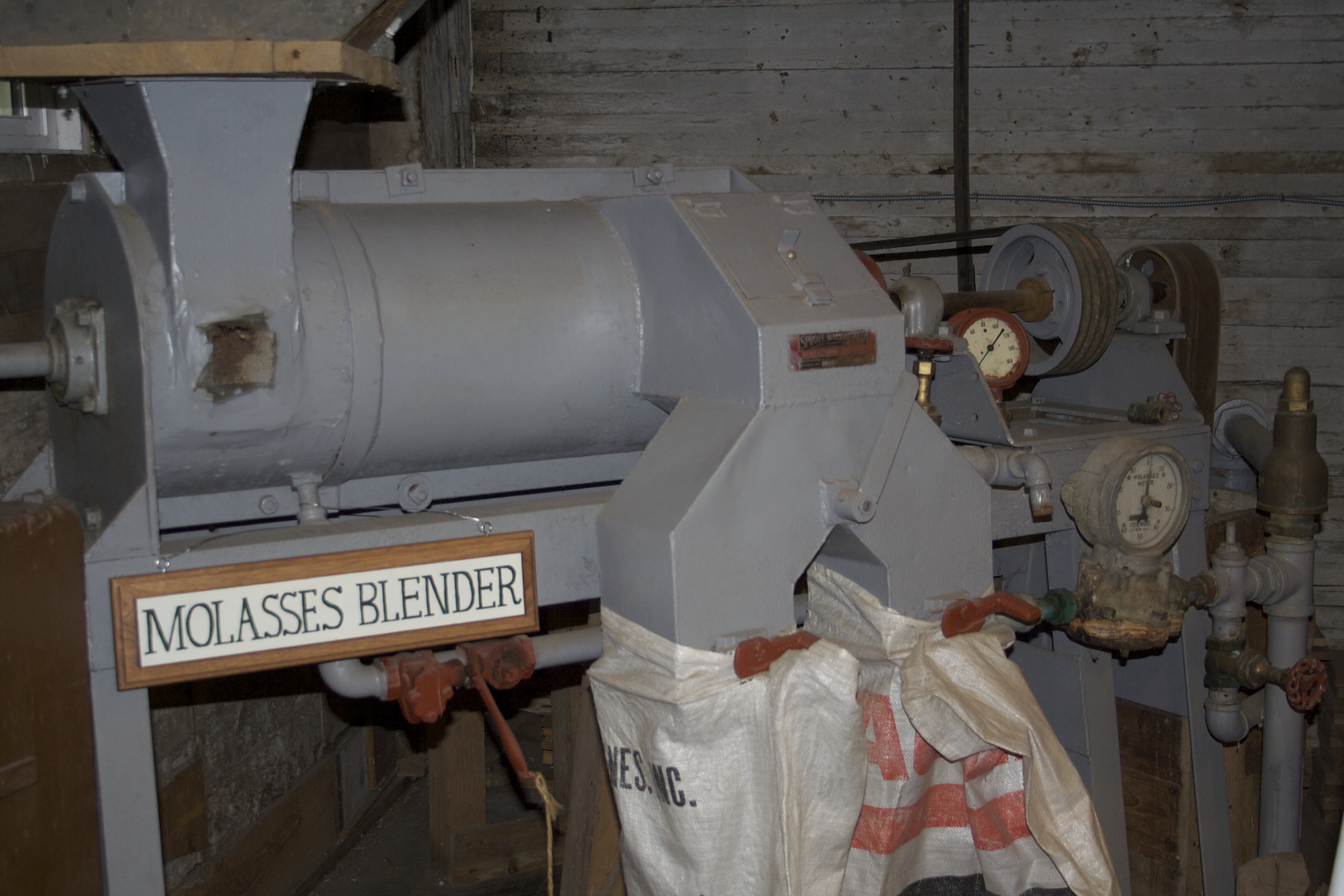
The Mill had a 3000 gallon molasses cistern in the basement under the ice cream shop kitchen. The molasses was pumped up to the first floor using the molasses pump and then fed into the molasses blender to make sweet feed for horses. When we built the ice cream shop, code wouldn’t let us have the access in the floor of the kitchen so we had to cut through the wall of the cistern which was a foot thick reinforced concrete.
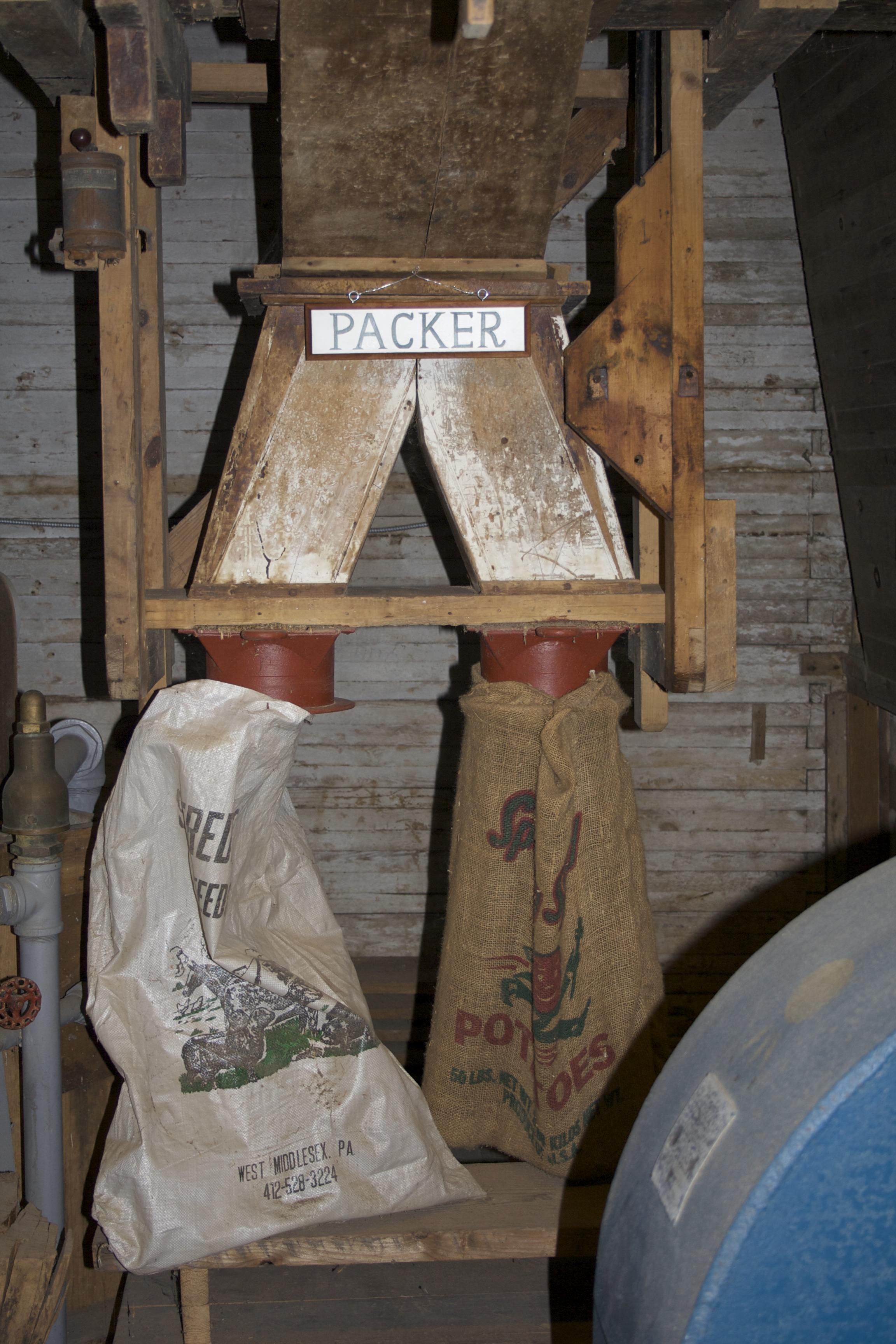
This is the packing area on the first floor of the Mill. The packer is called a “pair of pants packer” because it could fill two bags at one time. It was fed by a horizontal box which contained a powered auger to feed the grain through the box.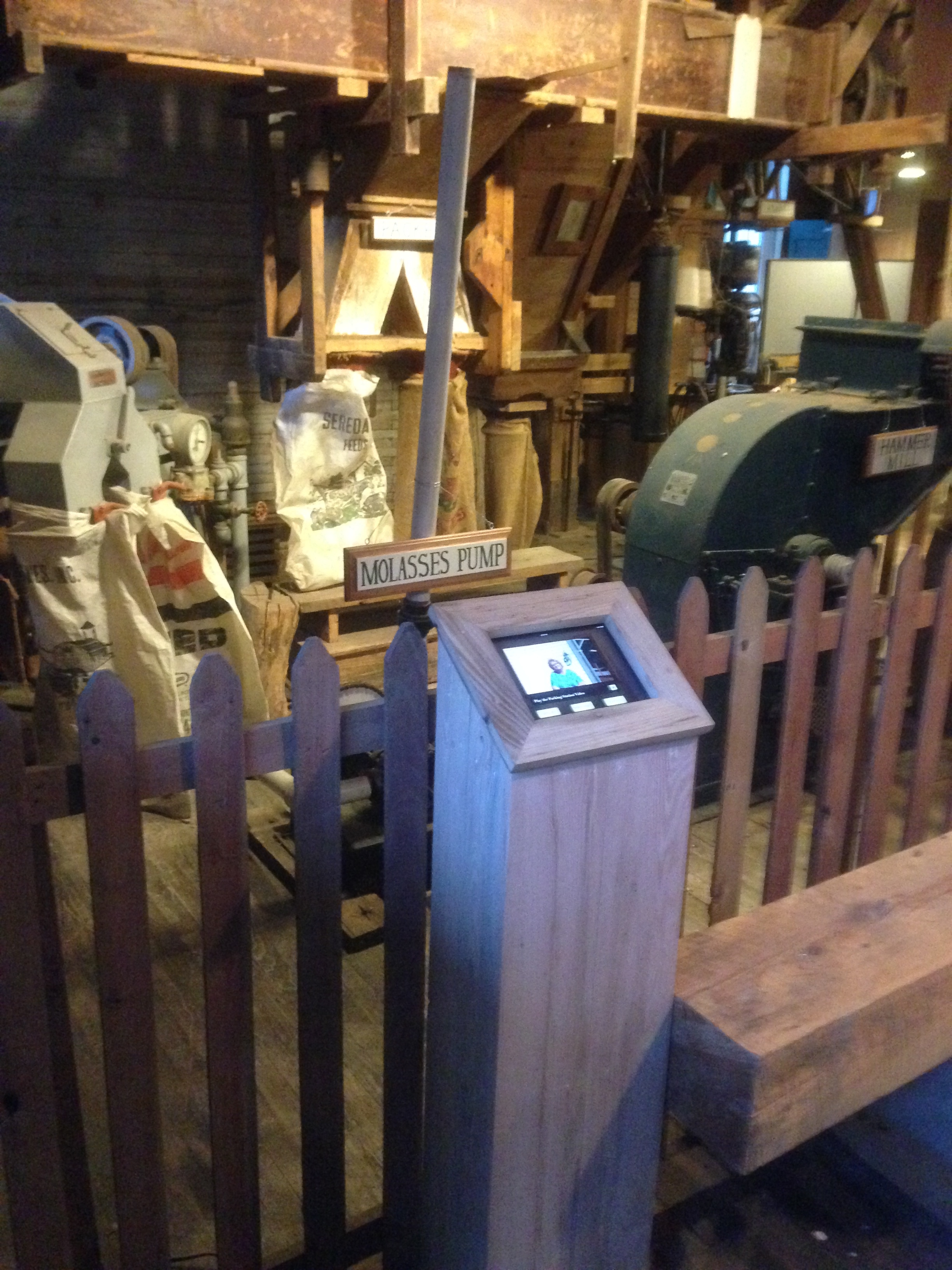
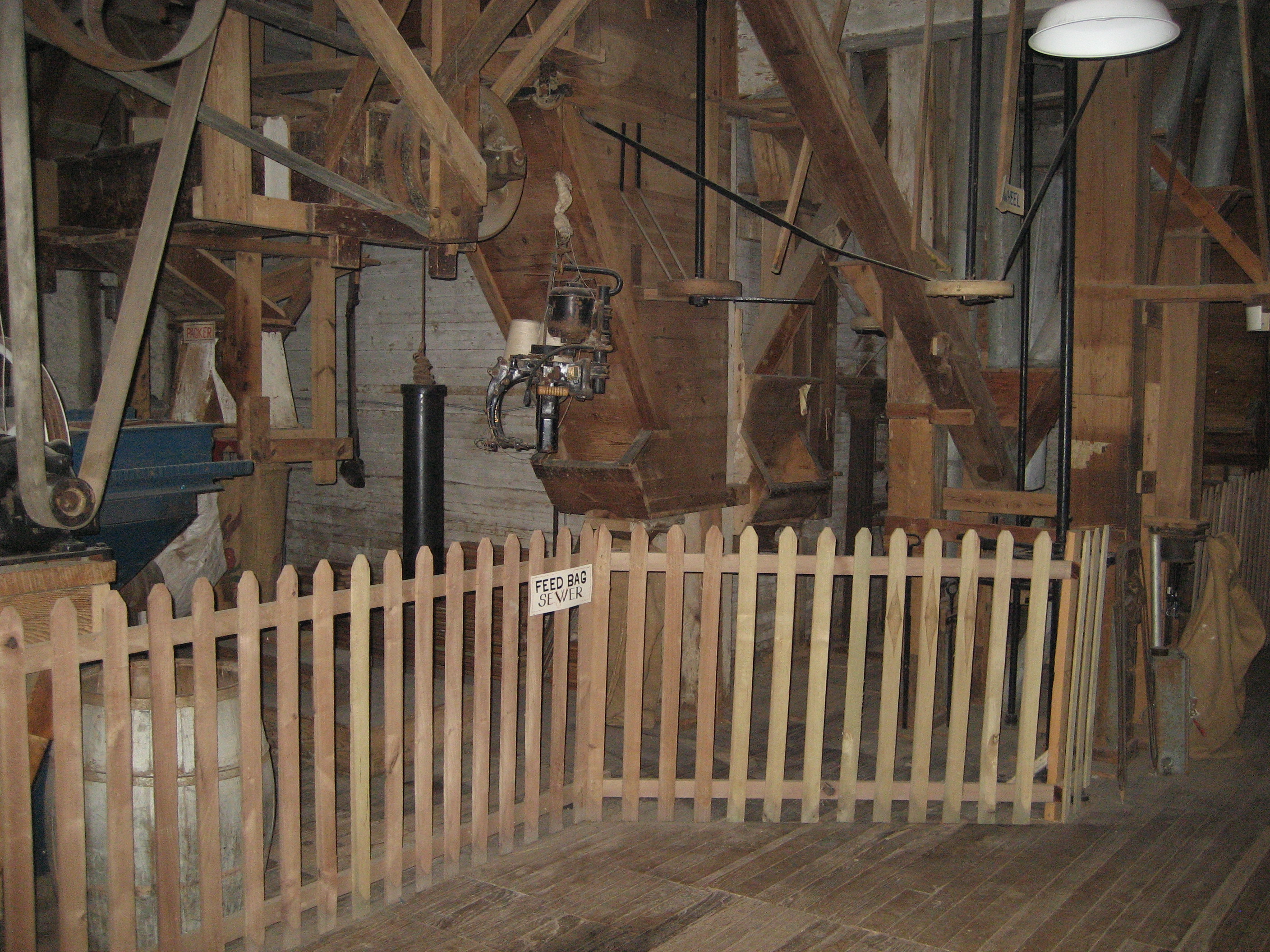
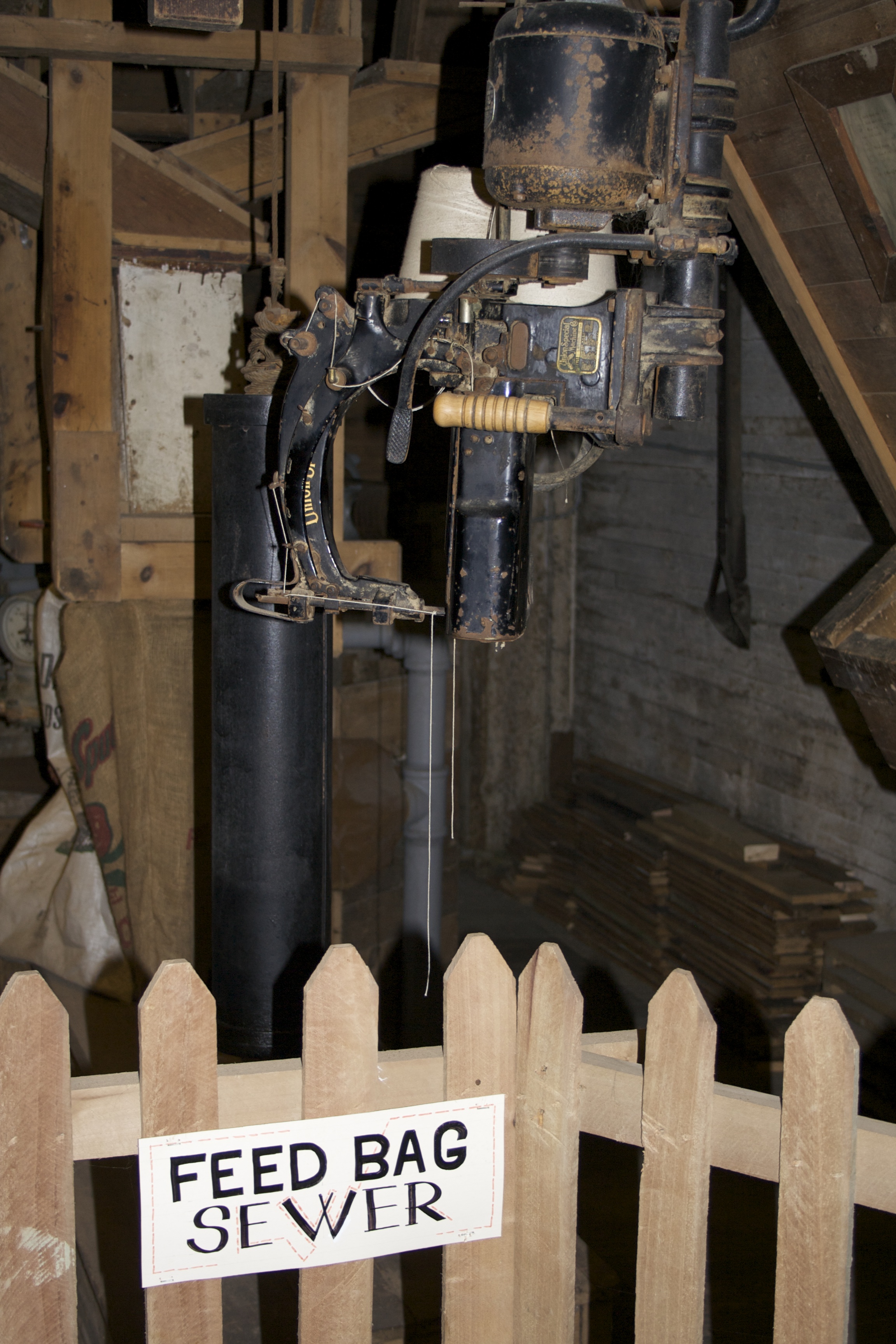
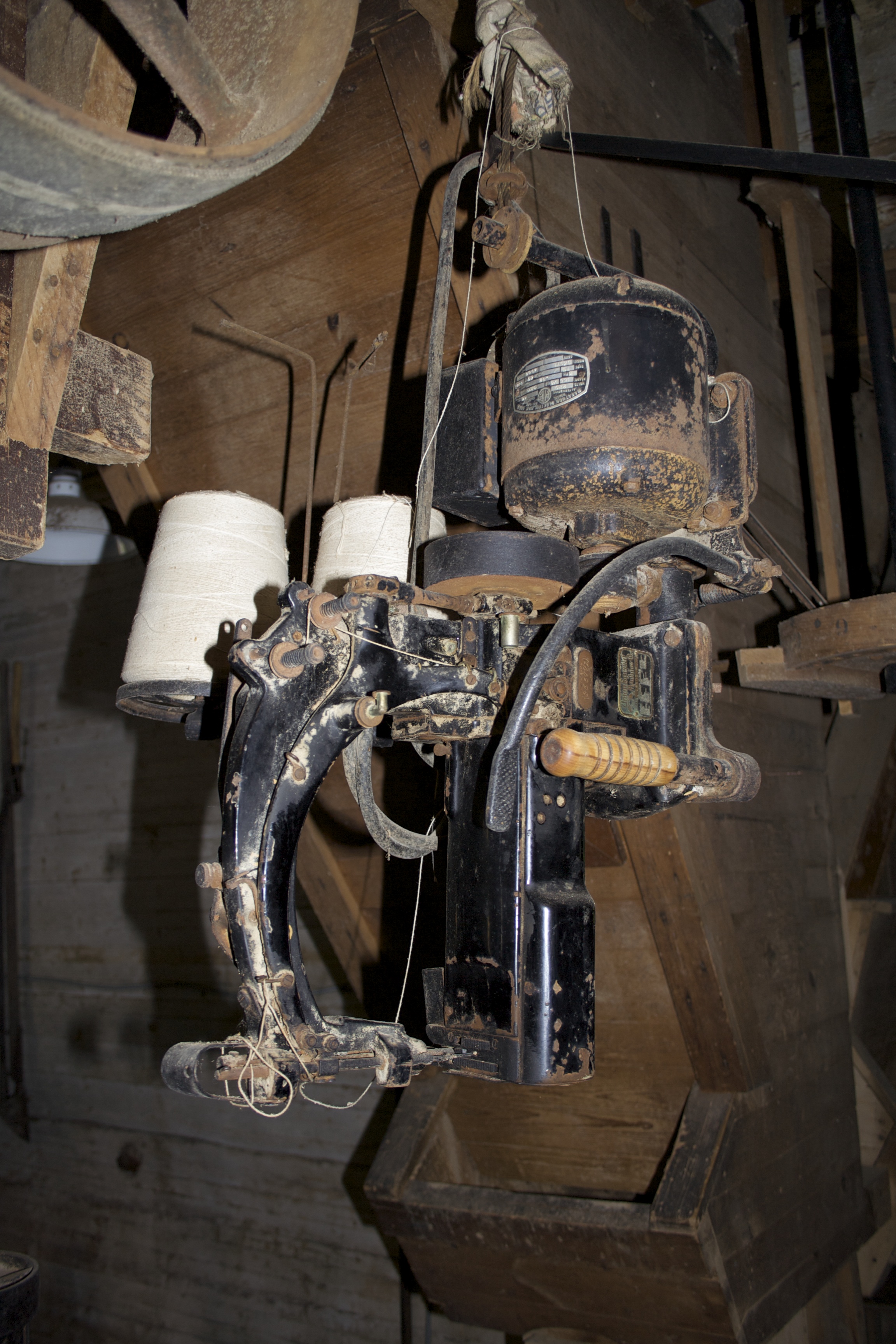
The feed sack sewing machine is part of the first floor museum. I have had people ask me what a feed bag sewer (as in sanitary sewer) is. We are talking about the machine that sews the bags closed. Note the large black counterweight to the left that offset the weight of the machine. Nancy tells a story about Don Larimore who worked at the Mill in the 1950s and visited recently. He sewed his finger into a bag. After a few choice words, he just cut the bag open and tried again. Don also told us about raising ten thousand peeps at the Mill on the third floor and the waste removal challenges.
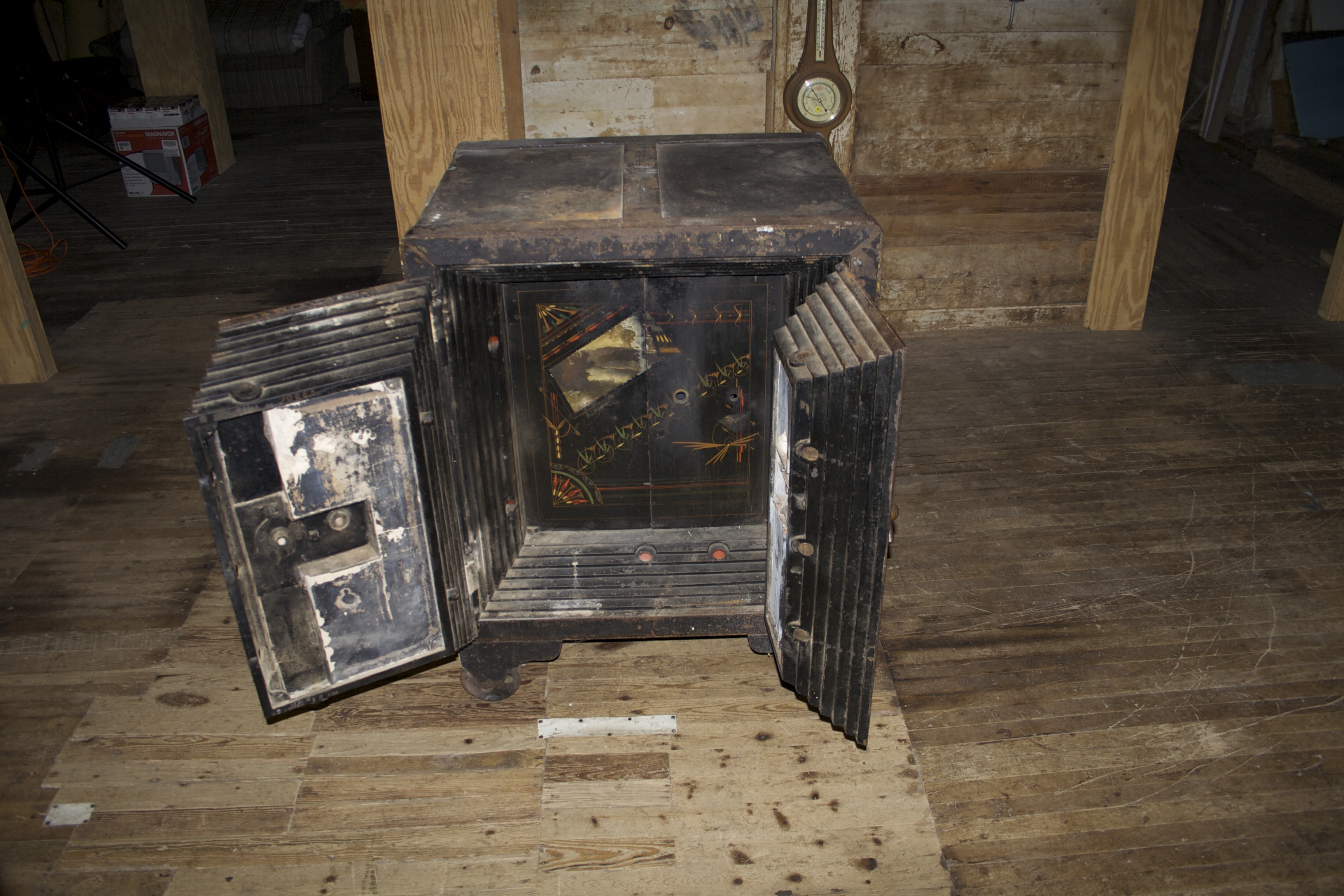
It seems appropriate for April fools day to talk about the safe. Nancy always introduces the safe as the one Jesse James blew up on his way through town. This was not true but it made a fun story. When we bought the Mill in 2005 the safe was sitting in the middle of the first floor and it took about a year for us to find enough people to move it up against the wall. It was on wheels but it was very heavy. I’m hoping we will find it in the basement when we clean up from the fire. The first time we opened the safe- its entire contents was a roll of masking tape. We assumed the crafters felt that was precious.
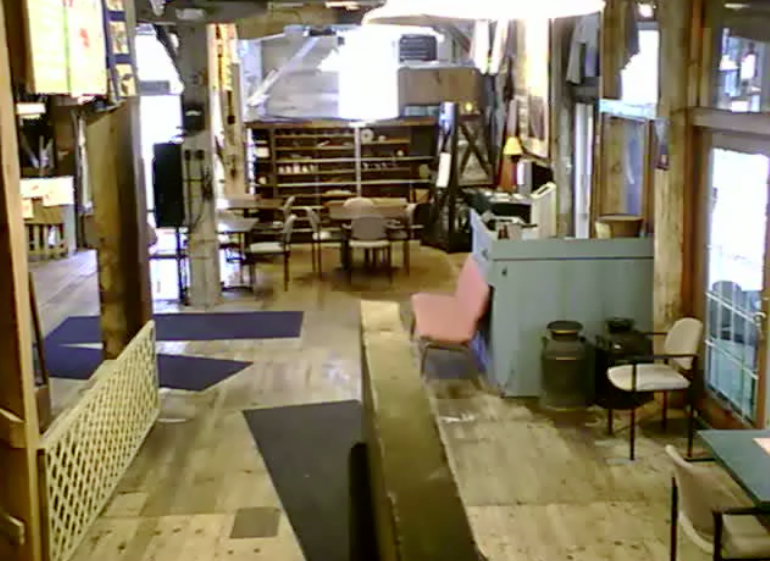
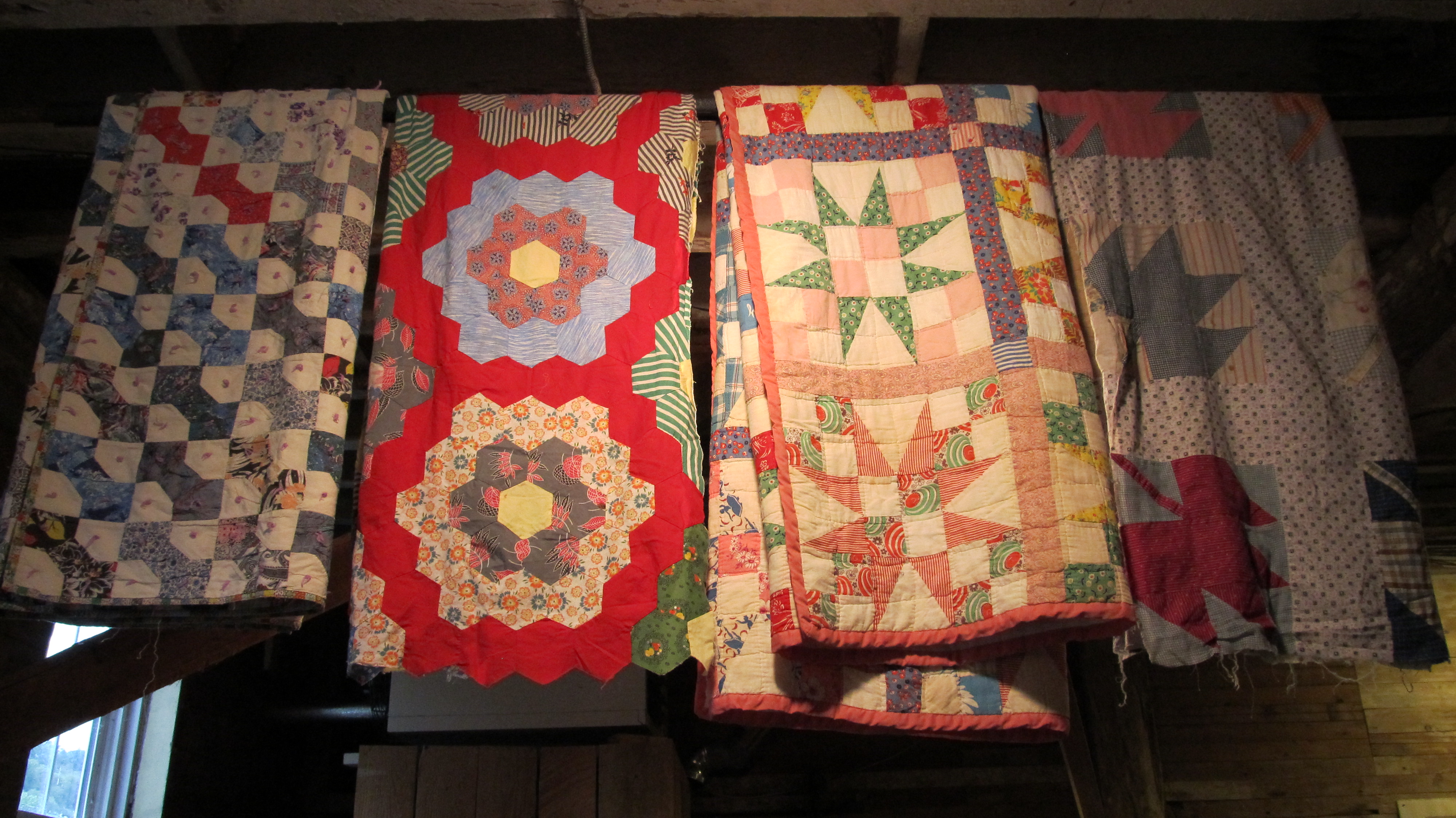
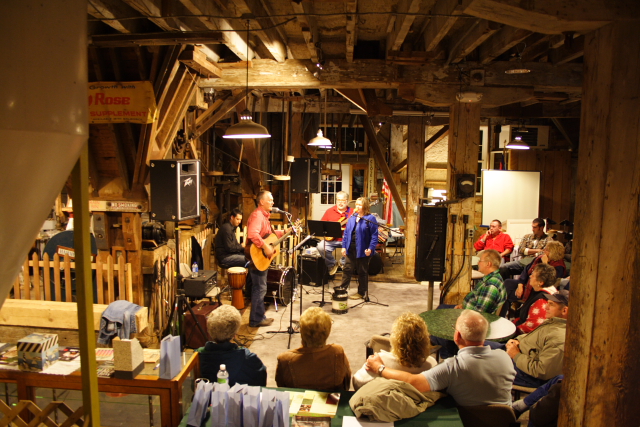
The first floor of the Mill was full of wonderful things. It was mostly a museum but we fed people here, had music concerts, displayed Nancy’s collection of feed sack clothes and quilts. It was the home of the big safe and the feed mixer and the Mill equipment museum. I will talk more about it in future pages.
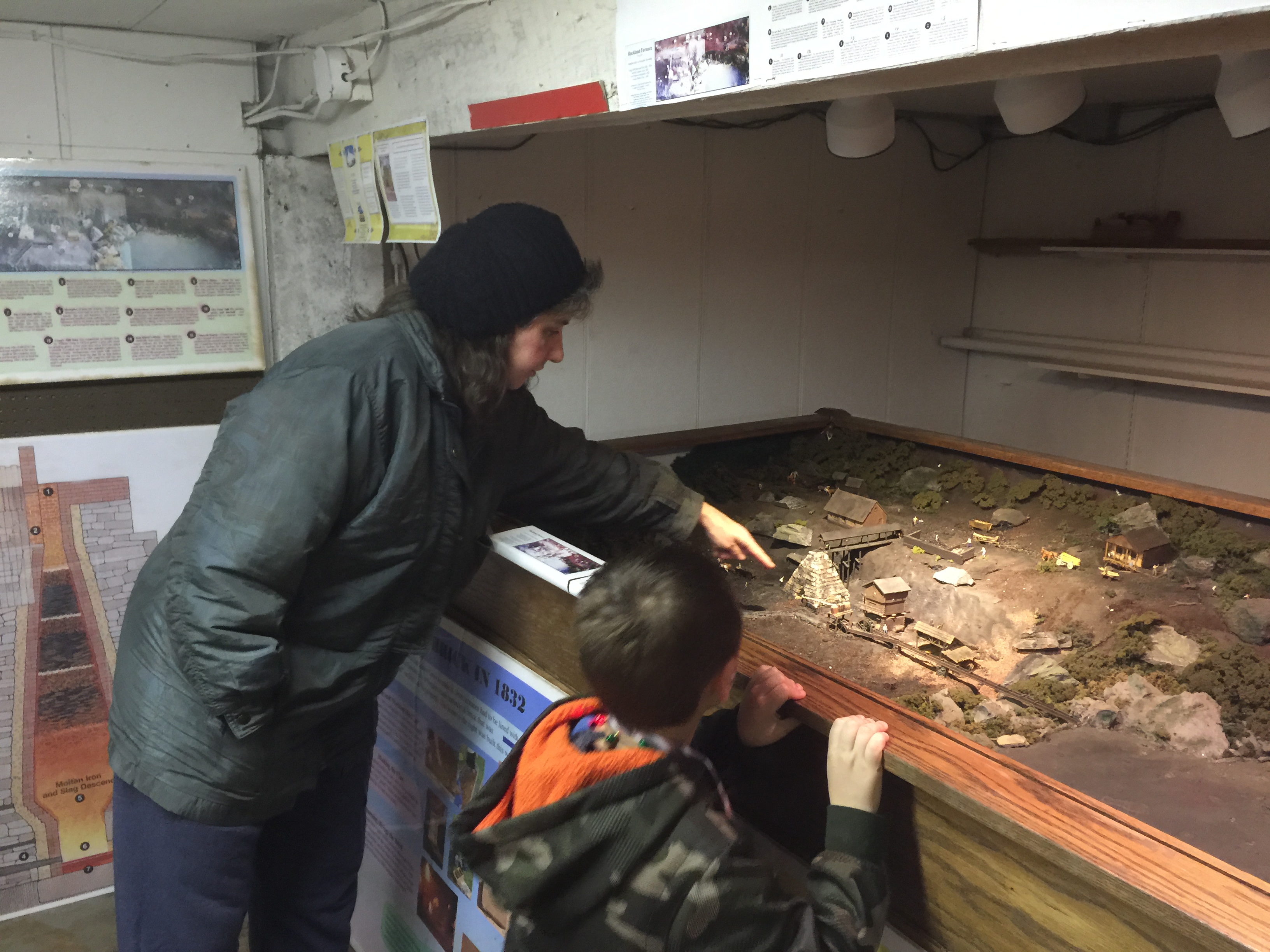
One of the best loved features of the Mill museum was the diorama of Freedom Falls. It was on loan to the Mill by the Pumping Jack Museum and located in the room that connected the Emporium with the first floor Museum.

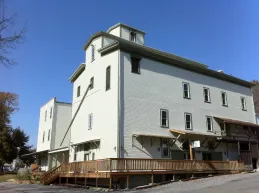
 The Emlenton Mill